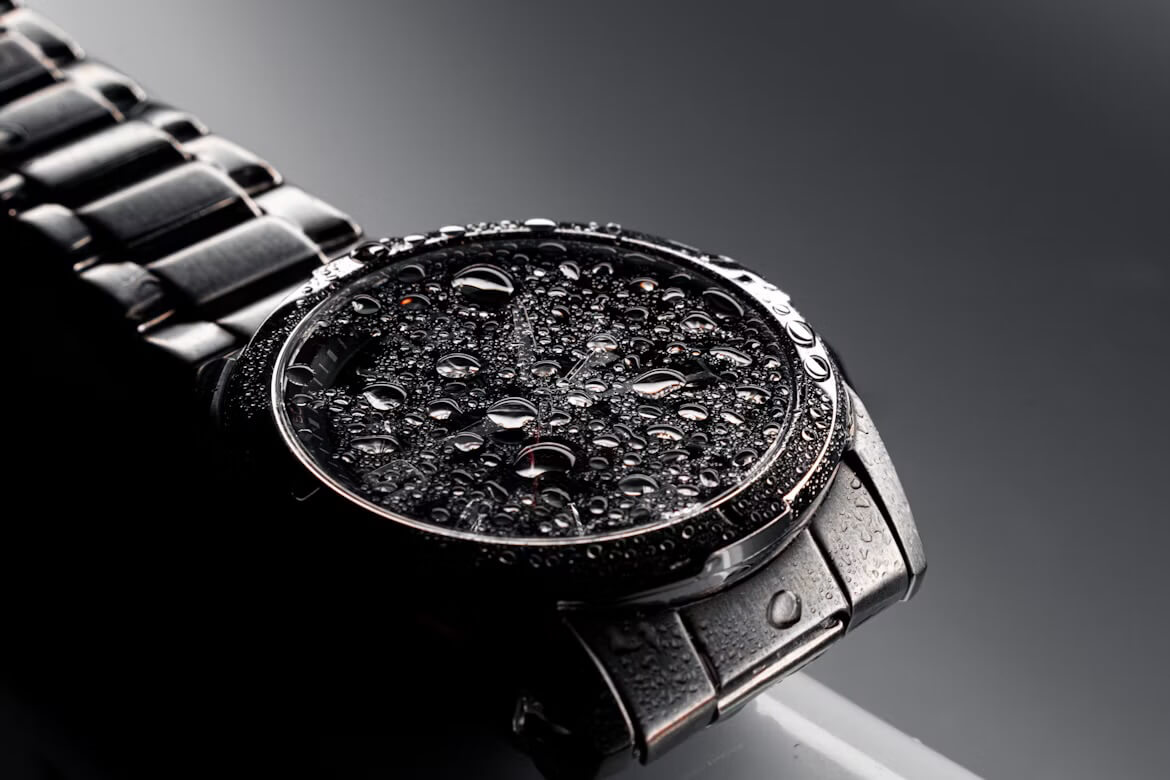
A watch’s water resistance is given in ATM (atmospheres), bar or metres. You’ll usually find this value on the dial or the case back, and it tells you how much water pressure your watch can handle. One important thing to know: this value says nothing about how deep you can actually dive with it. It describes a static pressure test in a lab, not a watch moving around underwater. So the rule of thumb, when in doubt, is always to do less than the number technically allows.
What does your watch’s water resistance actually mean?
The higher the ATM, bar or metre rating, the more water pressure the case, crown and gaskets (the rubber rings that seal the watch) can withstand. Those gaskets are the vulnerable part: they harden and wear out over time, even if you never wear the watch. A watch that was perfectly water resistant five years ago may no longer be, without any visible sign on the outside.
Water resistance by ATM: what you can and can’t do
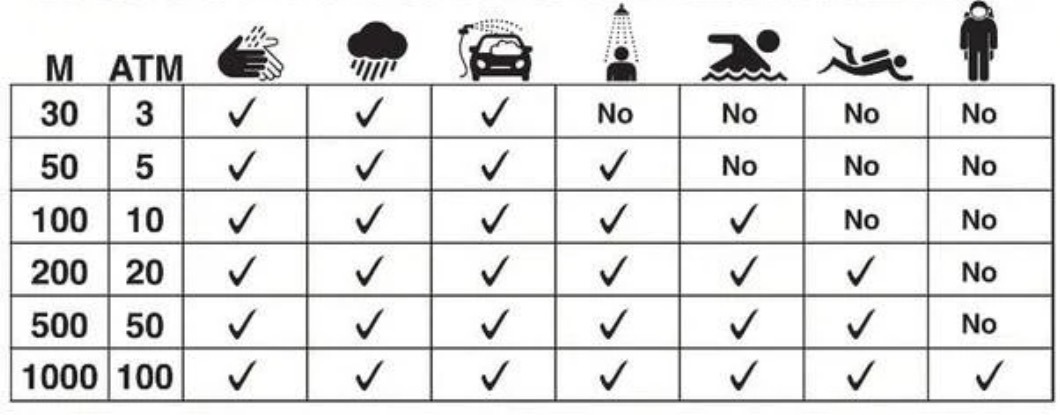
This overview shows what your watch can and can’t handle at each level. If in doubt, always choose the cautious option.
| ATM / metres | Suitable for | Not suitable for |
|---|---|---|
| 3 ATM / 30 metres | Rain, washing hands, light splashes | Showering, bathing, swimming |
| 5 ATM / 50 metres | A quick shower or washing up, without big temperature changes | Swimming, diving, jumping into water |
| 10 ATM / 100 metres | Swimming, snorkelling, water sports in shallow water | Deep-sea diving with scuba gear |
| 20 ATM / 200 metres | Professional swimming, snorkelling, recreational diving | Saturation diving at great depth |
| 50 ATM / 500 metres | Sport and professional diving | Extreme deep-sea diving |
| 100 ATM / 1000 metres | Any form of diving, including professional use |
How to keep your watch water resistant
- No hot water. Never wear your watch in the shower, a hot bath or the sauna. The heat makes the case expand and can deform the gaskets, letting water in anyway.
- Tighten the crown. Does your watch have a screw-down crown? Always tighten it fully before the watch comes into contact with water.
- Rinse after sea or pool water. Salt water and chlorine can damage the metal or the gaskets. Rinse your watch with clean tap water afterwards.
Not sure if your watch is still water resistant?
Because the gaskets wear out invisibly, you can’t judge a watch’s water resistance just by looking at it. At Watchme Amsterdam we test it with professional pressure equipment, the same test watch brands use themselves.
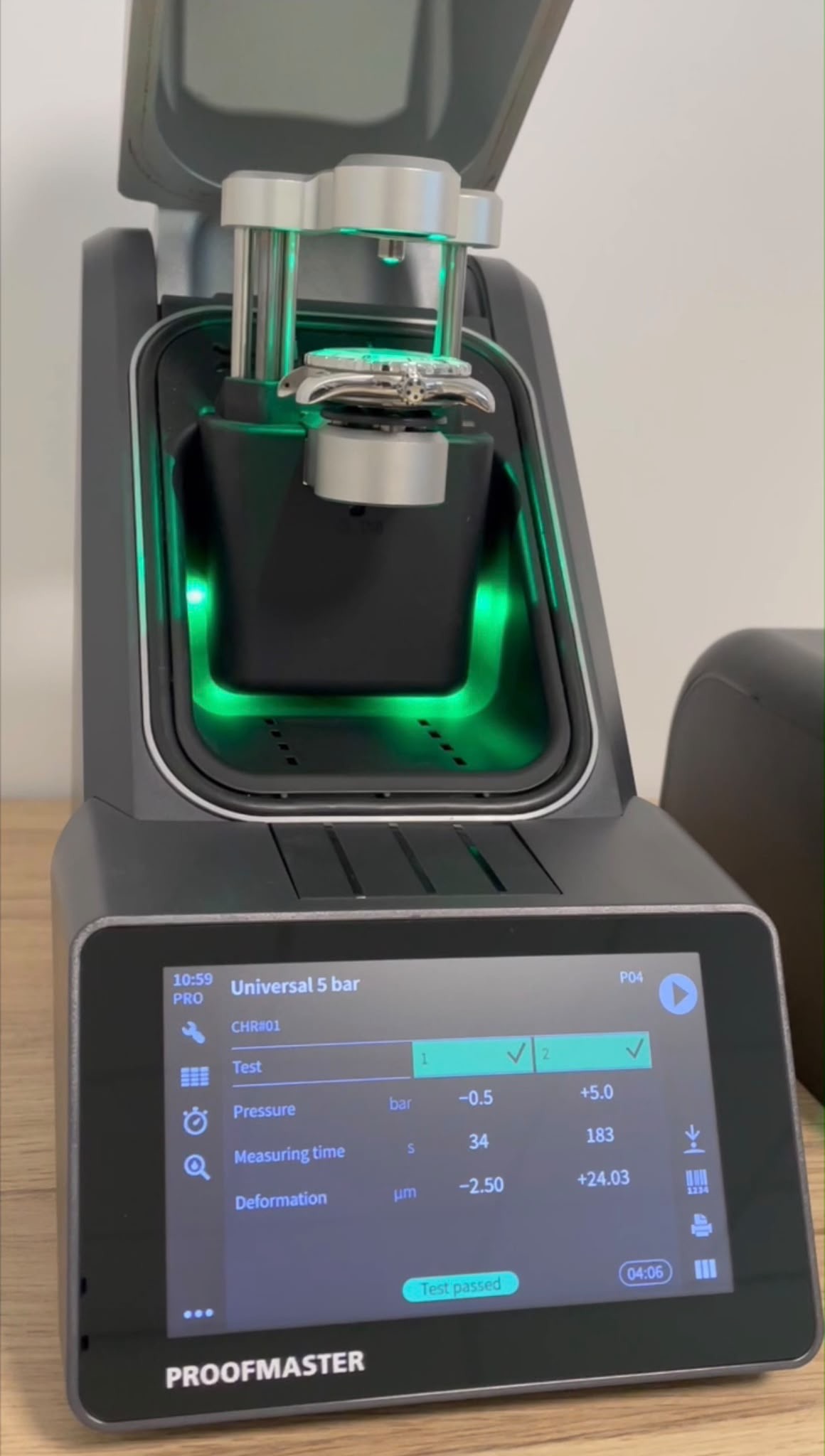
Not sure if your watch is still water resistant, or are you going swimming, snorkelling or on holiday soon? Have it checked beforehand, so you can get in the water without worrying. Check out our maintenance service or get in touch to make an appointment.